
I am trying to describe a state of mind that is almost impossible to express in words. Some people spend years practicing painting professionally yet remain craftsmen, merely fulfilling commissions. What moves me most in art is the human figure, because in this brief life everything—joy and sorrow, happiness and grief—is born of people and of our relationships with one another.
As objects become part of people's everyday lives, serving them, wearing out, changing with time, they seem to absorb something of their owners. The objects I once painted bore a remarkable resemblance to the people who were closest to me. Even when creating still lifes, I found myself telling stories of human pain, helplessness, and melancholy.
I have always been deeply moved by flowers growing in pots. Day after day they wither, fade, and live through their final moments of quiet struggle. Today I choose objects for my still lifes that, once placed on the canvas, seem to challenge the very conventional notion of what a still life is.
Take, for example, a pair of gloves carelessly left on a table. They are no longer merely motionless objects but beings filled with life and movement. One can almost sense their desire to move closer to one another, to communicate, to engage in a silent conversation.
The same can be said of tools. Pliers, cutters, and pincers sometimes arrange themselves in such a way that their gripping ends resemble a human mouth, as if ready to speak—or to express something through silence.
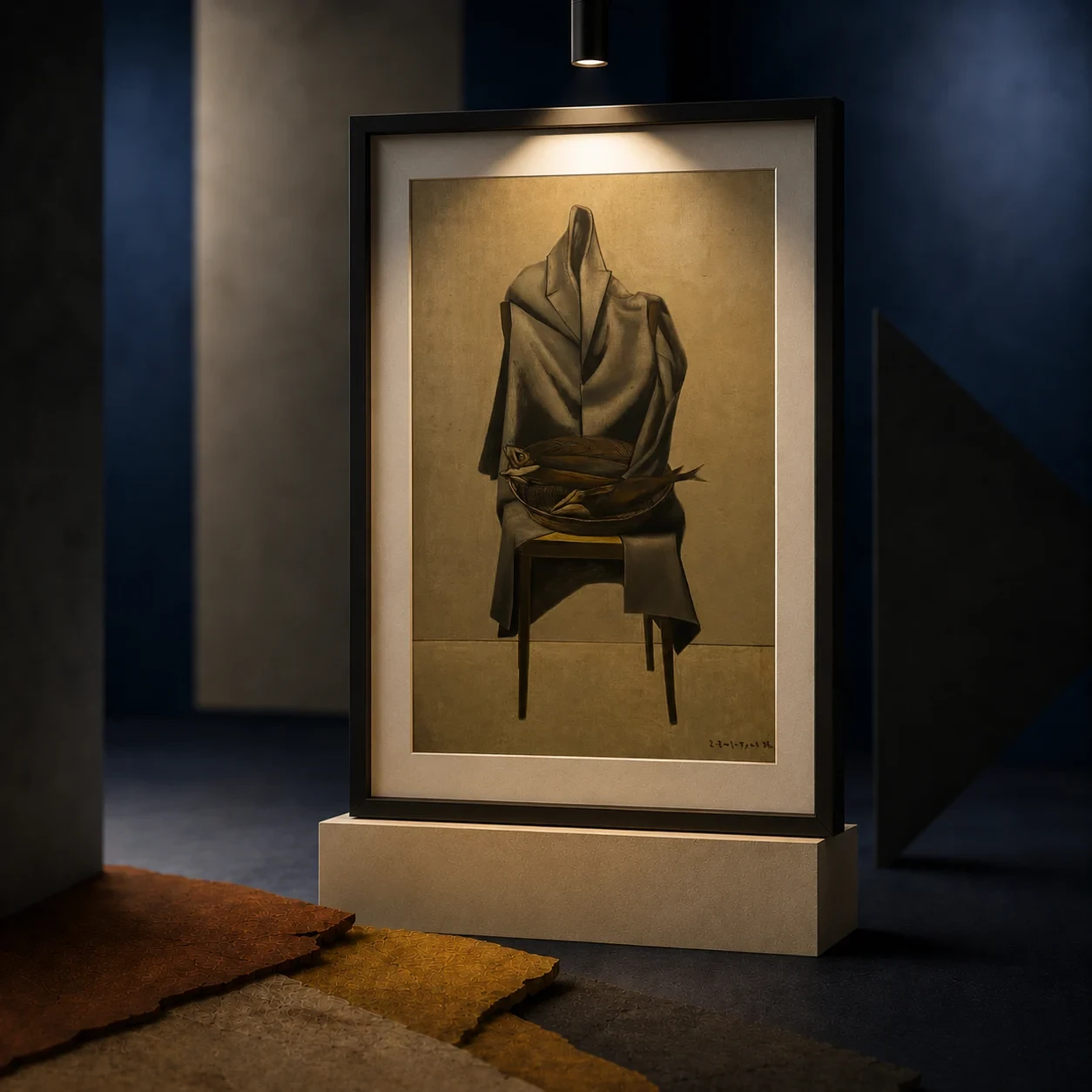
Even a coat casually draped over a chair can evoke the presence of its owner, bringing that person back to life in our imagination and conveying the emotions they have left behind.
The photograph features Hakob Hakobyan’s painting "The Fisherman."