Ervand Kochar
Yervand Kochar (1899-1979) In 1899 - was born in Tiflis. 1909-1918 - studied at Nersisyan School, where R. studied painting. Near Shamshinyan.…
 +
+Yervand Kochar (1899-1979) In 1899
- was born in Tiflis.
1909-1918
- studied at Nersisyan School, where R. studied painting.
Near Shamshinyan.
1914-1918
- studied at the school of fine arts and sculpture attached to the Caucasian Society for the Promotion of Fine Arts, E.
in Tadevosyan's class.
1918-1919
- lived in Moscow and studied at the state studios of Free Fine Arts, P.
Near Konchalovsky.
1919-1921
- taught drawing and painting in Tiflis gymnasiums.
1919-1920
- participated in Autumn II and III exhibitions (Tiflis).
Since 1921, he has been a professor of painting in the highest state art and technical studios.
1921-1922
- Member of the exhibition committee of "Union of Armenian Artists" and "Hayartun" union.
In 1922
- an exhibition of paintings was opened in Constantinople.
Went to St.
Lazar Island.
He taught at Murad-Rafaelyan College.
In 1923
- arrived in Paris, where his first solo exhibition was opened.
In 1924
- participated in the exhibitions "Hall of Independents" and "Autumn Hall".
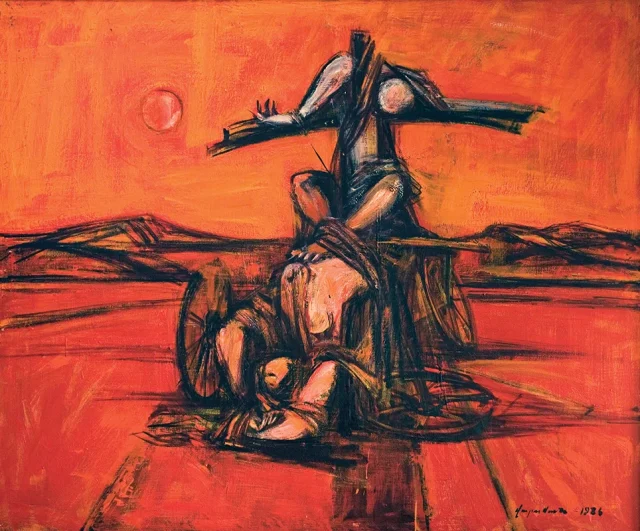
In 1926
- participated in the "Hall of Independents" exhibition.
Individual exhibition in the "Ausacre du printemps" gallery (author of the catalog: Valdemar Georges).
In 1928
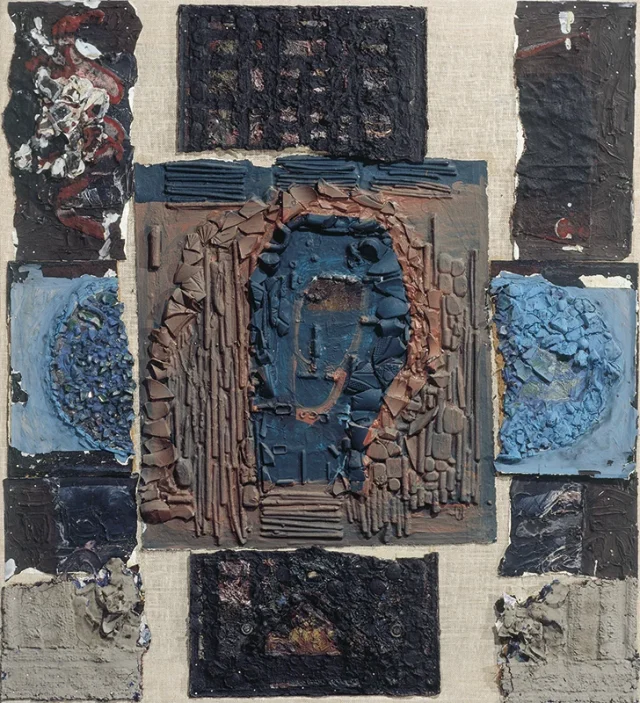
- In the "Van Leer" gallery, an individual exhibition of the works of a new form of plastic painting, "Spatial painting", was opened.
In 1929
- The works of "Spatial painting" were exhibited in the halls of the "Bonaparte" publishing house and at the "Panorama of Contemporary Art" international exhibition, in which Braque, Chagall, Delaunay, Lursa, Matisse, Mirro, Picabia, Picasso, Survash, Utrillo, Vlaming and others participated.
In 1930
- participated in the "Confrontation" exhibition, the exhibitions of the "Fenetre ouverte" gallery and the "The Leicester Galleries" gallery in London with Leger, Metzenje, Severin and others.
In 1932
- Participated in the exhibition "Cubists, Surrealists and Abstractionists" at the Leons Rosenberg Gallery in Paris.
In 1934
- individual exhibition: "Kochar.
Painting.
A sculpture.
Graphics" ("Vignon" gallery).
In 1935
- After participating in exhibitions in Budapest, Brno, Bratislava, Prague, he published his teaching of "Spatial painting".
In 1936
- Signed the Manifesto of Dimensionism with Arp, Mirro, Delaunay, Kandinsky, Picabia and others.
He returned to Tiflis, applied for admission to the Union of Artists of Georgia and was rejected.
He moved to Yerevan in the fall.
In 1937
- became a member of the Union of Artists of Armenia, regularly participated in republican and all-union exhibitions.
On October 2, Kochar was accused of "anti-Soviet propaganda and counter-revolutionary activities" in the "Soviet Armenia" newspaper.
In 1938
- participated in the ten days of Armenian culture held in Moscow.
In 1939
- On the occasion of the 1000th anniversary of the "David of Sassoon" epic, he created a plaster statue of David of Sassoon riding a horse in 18 days, which was placed in the square near the Yerevan station (destroyed in 1941).
He worked on the illustrations of the Leningrad academic edition of the epic "David of Sassoon".
In 1940
- in the all-union competition, he was awarded the II class prize for the sketch of the statue of Nizami Gyanjevi.
In 1941
- on June 23, he was arrested and imprisoned by the NKVD for perjury.
In 1943
- was released on August 23 with the support of his friends Karo Halabyan and Anastas Mikoyan.
1944-1945
- taught painting and drawing at the Faculty of Architecture.
1947-1948
- H. worked.
Paronyan State Theater of Musical Comedy.
He received an author's certificate in Moscow for the discovery of a new (cold) method of making wax paints.
The Council of Ministers of the ASSR adopted a decision to organize the production of wax paints using his method.
In 1953
- The "Zvartnots Eagle" monument (bronze) was placed near the Zvartnots Cathedral.
In 1955
- Sonia Delaunay, Meline Kochar, Valdemar Georges started a campaign to open Kochar's solo exhibition in Paris, in connection with which a manifesto was signed by prominent figures of French culture (the exhibition was opened only in 1966, without the presence of the author and his post-Paris works).
In 1956
- was awarded the title of Honored Art Worker of the Armenian SSR.
In 1959
- The monument of David with a horse (rough copper) was placed in the square near the Yerevan station.
In 1963
- The Georges Pampidou Center of the Museum of Modern Art (Paris) acquired one of the works of "Spatial Painting" (1934).
In 1965
- The first individual exhibition in Yerevan.
Received the title of People's Artist of the ASSR.
In 1967
- He won a state award for the "David of Sassoon" statue.
In 1969
- The statue of Komitas (rough copper) was installed in Echmiadzin.
In 1970
- participated in the exhibition "From Urartu to our days" (Louvre, Paris).
In 1971
- The second solo exhibition in Yerevan, at the Union of Artists of Armenia.
In 1972
- The album "Yervand Kochar" was published (author-compiler: H.
Igityan).
1973-1974
- individual exhibitions in the Art Museum of the Peoples of the East (Moscow), Baku and Tbilisi.
Kochar's works were acquired by the Tretyakov Gallery and the Russian Museum.
In 1975
- The second horseman, "Vardan Mamikonyan" monument (rough copper) was installed in Yerevan.
People's Artist of the USSR since 1976.
In 1978
- individual exhibition of graphic works.
In 1979
- died on January 22 in Yerevan.
In 1980
- posthumous exhibition at the Union of Artists of Armenia.
In 1984
- Yervand Kochar Museum was opened in Yerevan.
In 1989
- a posthumous exhibition in Paris on the occasion of the 90th anniversary.
In 1997
- Kochar's name was registered in 1998-1999.
In the list of Memorable days marked by UNESCO.
2000
- the new album "Kochar" was published (author-composer: H.
Igityan).
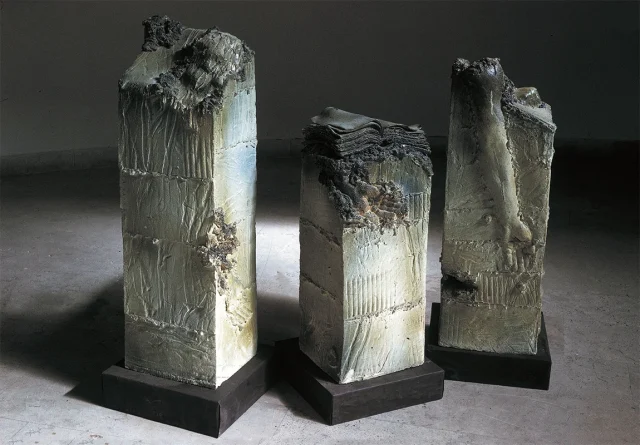
The works are located in E.
Kochar Museum (Yerevan), National Gallery of Armenia, Russian State Museum (St. Petersburg), State Tretyakov Gallery (Moscow), Zh.
Pompidou Center (Paris), Oriental Art Museum (Moscow), Gulbenkian Museum (Lisbon), in many private collections in Armenia and abroad.
Go back
Related works